All Features

Martin J. Smith
Robert Siegel has peered into the post-Covid-19 future and concluded that anyone hoping for a quick recovery is likely to be disappointed. Which means a great many businesses will fail.
“We can say that with 1,000-percent certainty, and there are many reasons why,” says Siegel, a lecturer in…

Harish Jose
Shigeo Shingo is one of my heroes in industrial engineering. He had a great mind that thrived on curiosity. Today I am looking at Shingo’s Whys. This is in contrast to Taiichi Ohno’s 5 Whys method.
Ohno’s 5 Whys method is one of the tools in Toyota Production System to get to the root cause of an…

Katy Kvalvik
Communication is not only a necessary skill—it can be the difference between getting the contract, saving your company millions, and ultimate workplace harmony.
To be an effective leader, you must be an effective communicator. To be an effective communicator, you must believe in the value of every…

Wendy Stanley
Today’s manufacturers have plenty of software solution options that are meant to enhance their productivity. You may be familiar with each of these software packages. However, if you are not, it is important to understand what each of these software packages are designed to deliver.
Enterprise…

William A. Levinson
The U.S. House of Representatives has passed the HEROES Act (Health and Economic Recovery Omnibus Emergency Solutions Act)1 which will, if approved by the Senate and president, require OSHA to develop a standard for workplace protection against Covid-19.
Under section 120302 the legislation says…

Denrie Caila Perez
A new report from Trend Micro Research illustrates how advanced hackers are using unconventional attack vectors against smart manufacturing environments. Smart manufacturing technology generally operates through proprietary systems, which use their own proprietary language. However, these systems…

Leigh Turner
Given the death, suffering, social disruption and economic devastation caused by Covid-19, there is an urgent need to quickly develop therapies to treat this disease and prevent the spread of the virus.
But the U.S. Food and Drug Administration (FDA), charged with the task of evaluating and…

Tom Taormina
Each article in this series presents new tools for increasing return on investment (ROI), enhancing customer satisfaction, creating process excellence, and driving risk from an ISO 9001:2015-based quality management system (QMS). They will help implementers evolve quality management to overall…
Jason Chester
For many manufacturing quality professionals, the thought of updating their statistical process control (SPC) solution is like getting an extra birthday. Many quality experts know that modernizing the way they collect, analyze, and use data is a critical need for their organizations, now more than…

Eric Weisbrod
For nearly a century, statistical process control (SPC) has been the cornerstone of quality management and process control. But traditional SPC can’t keep up as the pace of manufacturing accelerates. Twenty-first century manufacturing lines produce multiple products and create thousands of data…
M. Tina Dacin, Laura Rees
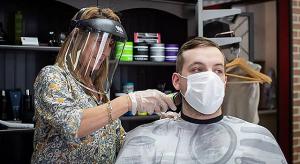
A small business has been given the green light to reopen amid the Covid-19 pandemic. What does it need to consider for employees and customers?
Small-business owners are reorganizing physical space to account for continued distancing requirements, and rethinking supply chains to deliver products…

Mariah Hauck
The latest Thomas Industrial Survey revealed the ongoing impacts of Covid-19 on North American manufacturing. Unsurprisingly, 89 percent of the 1,000+ North American manufacturers surveyed reported being affected by Covid-19. Business impacts include decreased demand, staffing issues, and…

Sarah Simon
Throughout my career, I’ve enjoyed the thrill of several transitions between parallel (related but different) professional camps. In each case, there was some level of misalignment between professional villages, ranging from misunderstanding to distrust and even acrimony.
Three major transitions I…

Thomas Hellwig
The Covid-19 world is marked by a high degree of uncertainty and existential fear, a dearth of social interaction, the convergence of professional and personal space, a lack of physical activity, and an obsessive focus on hygiene and social distancing. For professionals, this amounts to a toxic…

Jeff Dewar
‘We shouldn’t be calling some jobs essential.”
That line got me into a lot of trouble the other day when chatting with friends about how the term “essential worker” degrades the stature of all the “nonessentials,” when, in fact, we all play an essential role in the millions of supply chains across…

Paul Laughlin
One of the most practical data visualization books for my clients is Storytelling With Data (Wiley, 2015). So, this is a longer-than-usual book review of this modern classic.
I say that because it is not just accessible for those with no background in data visualization. The book also focuses on…

Dawn Bailey
In this article series, we explain some of the successful strategies and programs shared by Baldrige Award recipients to highlight categories of the Baldrige Criteria and how your organization might consider using them as inspiration.
Part of the purpose of the Malcolm Baldrige National Quality…

Maria Watson
The U.S. government has committed hundreds of billions of dollars to help small businesses weather the coronavirus pandemic. But early reports suggested larger companies were gobbling up much of the aid, while many of the neediest ones—particularly those with only a few dozen employees—weren’t…

Davis Balestracci
What is the Vasa? It was a Swedish warship built in 1628. It was supposed to be the grandest, largest, and most powerful warship of its time. King Gustavus Adolphus himself took a keen personal interest and insisted on an entire extra deck above the waterline to add to the majesty and comfort of…

Dave Cook
We are experiencing the biggest remote-work experiment in history—but many are beginning to imagine life after lockdown. Amid unprecedented global job losses, concerns about transport infrastructure, and the continuing need for workplace social distancing, governments are launching back-to-work…

John Smits, Gary Confalone, Tom Kinnare
Confusion between the two terms “RADAR” and “LIDAR” is understandable. Their names are nearly synonymous, and the terms are often used interchangeably. The acronyms are RADAR, which stands for RAdio Detection And Ranging; and LIDAR, which stands for LIght Detection And Ranging. The major difference…

Raghu Kalé
The mental makeup of the human mind is an enigma. Understanding reality has a bearing in comprehension. As a communications professional, I have grappled with what provokes audiences into believing a proposition, and what douses their suspicions and doubts. Emotion has a vital role in decision-…

Ryan E. Day
The Covid-19 pandemic is disrupting business across the globe, and supply chains are being stressed to their limits by sudden and drastic increases in online commerce. As organizations strive to continue delivering physical product, the industrial internet of things (IIoT) is being considered as a…

Steve McKee
The Philippine Department of Transportation got into a bit of a fix recently for publicly thanking the coronavirus. In an attempt to “provide an enlightening and awakening narrative” that might cause people to see a silver lining in the viral cloud over their heads, the DOT instead found itself…

Hari Abburi
If there’s one thing the global business community is learning from the Covid-19 pandemic, it’s the outright imperative for companies to be agile “from top to bottom.” This lesson continues to ebb, flow, and unfold daily, wreaking having on bottom lines in every corner of the world.
In fact,…